
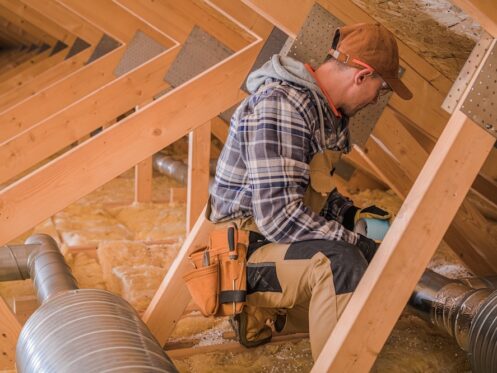
Many homeowners focus on the equipment itself when thinking about heating and cooling performance. However, the condition of your attic can play a major role in how well your HVAC system operates. When attic environments are poorly insulated or improperly ventilated, the system often has to work harder to maintain comfortable temperatures throughout the home.
In climates like North Alabama, where summers are hot and humidity is common, attic conditions can have a noticeable impact on system performance and indoor comfort.
Why The Attic Matters For HVAC Systems
In many homes, a large portion of the HVAC system runs through the attic. Ductwork, air handlers, and other components are often installed above the ceiling. If the attic becomes excessively hot in the summer, that heat surrounds the ductwork and equipment.
This environment can cause the system to lose cooling efficiency before the air even reaches the living space. The HVAC equipment may need to run longer cycles to compensate for that heat gain.
Over time, this added strain can impact comfort and system performance.
Insufficient Insulation Creates Temperature Loss
Attic insulation plays a key role in maintaining stable indoor temperatures. When insulation levels are too low or unevenly distributed, heat can easily move between the attic and the home below.
During summer in Huntsville, attic temperatures can climb well above outdoor air temperatures. Without proper insulation, that heat can transfer into living areas and make the HVAC system work harder to maintain cooler indoor conditions.
Improving attic insulation can help slow this heat transfer and support more stable indoor temperatures.
Poor Ventilation Allows Heat To Build Up
Attic ventilation helps regulate temperature and moisture levels. When airflow in the attic is limited, heat can build up and remain trapped for long periods during the day.
This trapped heat surrounds the ductwork and HVAC equipment located in the attic. As the system pushes cooled air through the ducts, some of that cooling effect can be lost before the air reaches your rooms.
Balanced attic ventilation allows hot air to escape while drawing in cooler outside air, helping maintain a more manageable attic temperature.
Signs Your Attic May Be Affecting System Performance
Homeowners sometimes notice comfort issues without realizing the attic environment may be contributing to the problem.
Several warning signs can point to attic-related HVAC inefficiencies.
- Rooms that struggle to stay cool during hot afternoons
- Longer cooling cycles or increased run times
- Higher energy bills during the summer months
- Noticeable temperature differences between floors
- Excessive heat in the attic when inspected
When these symptoms appear, evaluating attic conditions may help identify the underlying cause.
Attic Improvements Can Support HVAC Efficiency
Addressing attic insulation and ventilation concerns can help create a better operating environment for HVAC equipment. A properly conditioned attic reduces the amount of heat surrounding the system and allows ductwork to deliver cooled air more effectively.
These improvements can support better airflow, more consistent indoor temperatures, and improved system efficiency.
Professional Evaluation Helps Identify Hidden Issues
Because attic conditions are often overlooked, problems can develop slowly without being noticed. A professional inspection can evaluate insulation levels, ventilation performance, and how the attic environment may be affecting the HVAC system.
For homeowners in Huntsville, AL, addressing attic conditions can play an important role in maintaining indoor comfort during the long summer season. At Batey Brothers Heating & Cooling, we provide heating and cooling maintenance, repairs, and system solutions designed to help your home operate more efficiently.
If you suspect attic conditions may be affecting your system’s performance, contact Batey Brothers Heating & Cooling today to schedule a professional evaluation.